
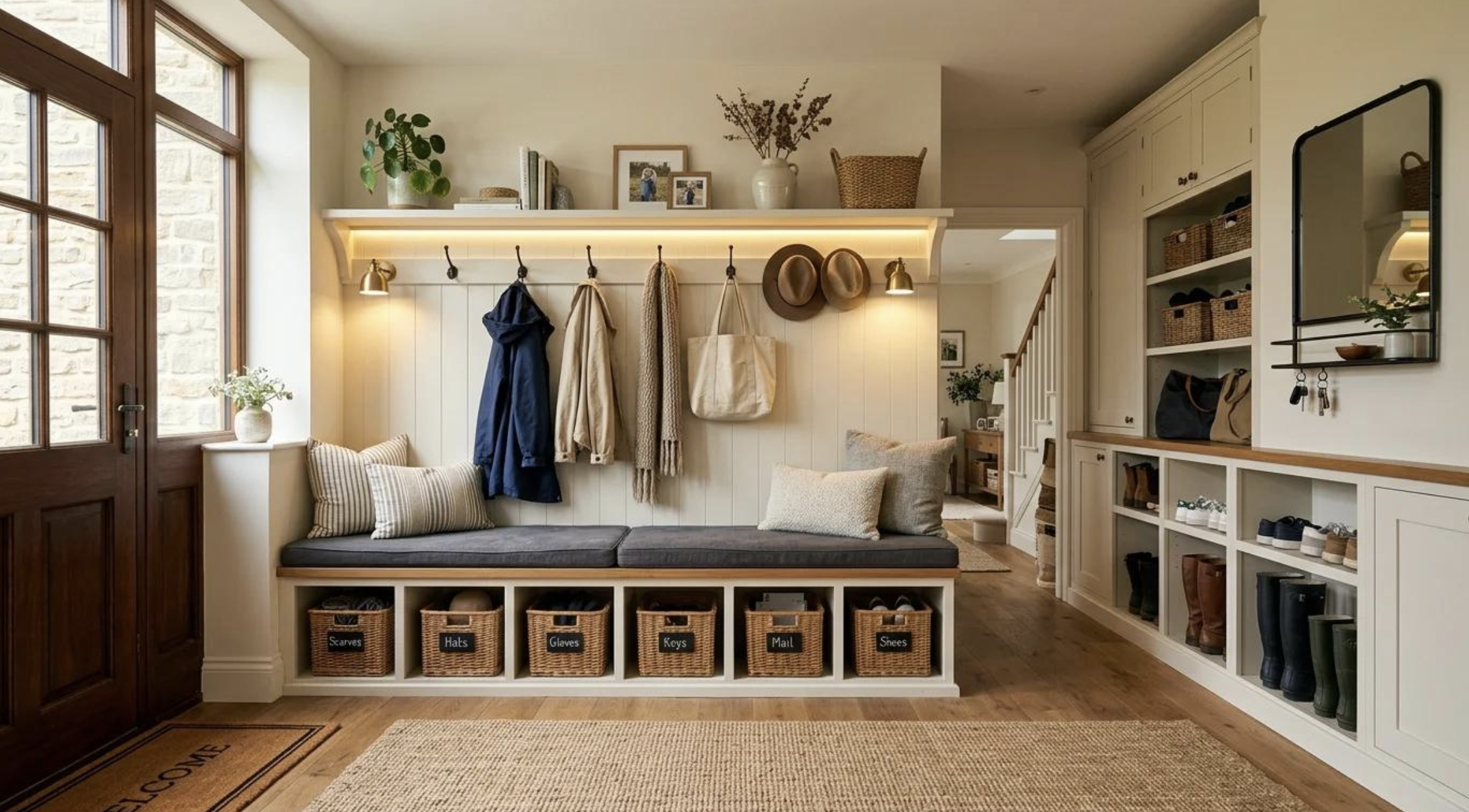
Have you ever walked into a room that's technically clean and organized, yet something still feels...off?
The counters are wiped down. The floors are clean. Everything is more or less where it belongs.
But somehow, the room still feels busy.
Welcome to the world of invisible clutter.
Invisible clutter isn't necessarily the piles of mail, overflowing closets, or shoes scattered across the floor. It's the everyday things we've become so accustomed to seeing that we no longer notice how much visual noise they're creating.
And sometimes, it's these little things—not the obvious messes—that keep our homes from feeling calm and pulled together.
Here are seven common culprits and some simple ways to address them.
1. Too Many Things on Your Countertops
Kitchen and bathroom counters have a way of becoming permanent homes for things we use every day.
Coffee makers, appliances, utensil holders, vitamins, lotions, soap dispensers...the list goes on.
Individually, these items may be useful. Collectively, they can make even a beautiful kitchen feel cluttered.
The fix: Take everything off your counters and only return what you use regularly. Store occasional-use items in cabinets and group everyday essentials on a tray or in a container.
You don't need completely empty countertops. Just a little breathing room.
2. Too Many Small Decorative Accessories
This is one I see often when styling homes.
A collection of little picture frames, candles, figurines, bowls, and decorative objects can make a room feel busy—even when everything is neatly arranged.
The problem isn't necessarily the accessories themselves. It's that too many small objects compete for your attention.
The fix: Try using fewer, larger pieces instead of lots of little ones.
A beautiful vase, a stack of books, and one meaningful object can make a stronger statement than ten smaller accessories.
And don't feel obligated to display everything you own. Rotating your favorite pieces keeps things fresh without adding clutter.
3. Exposed Cords and Electronics
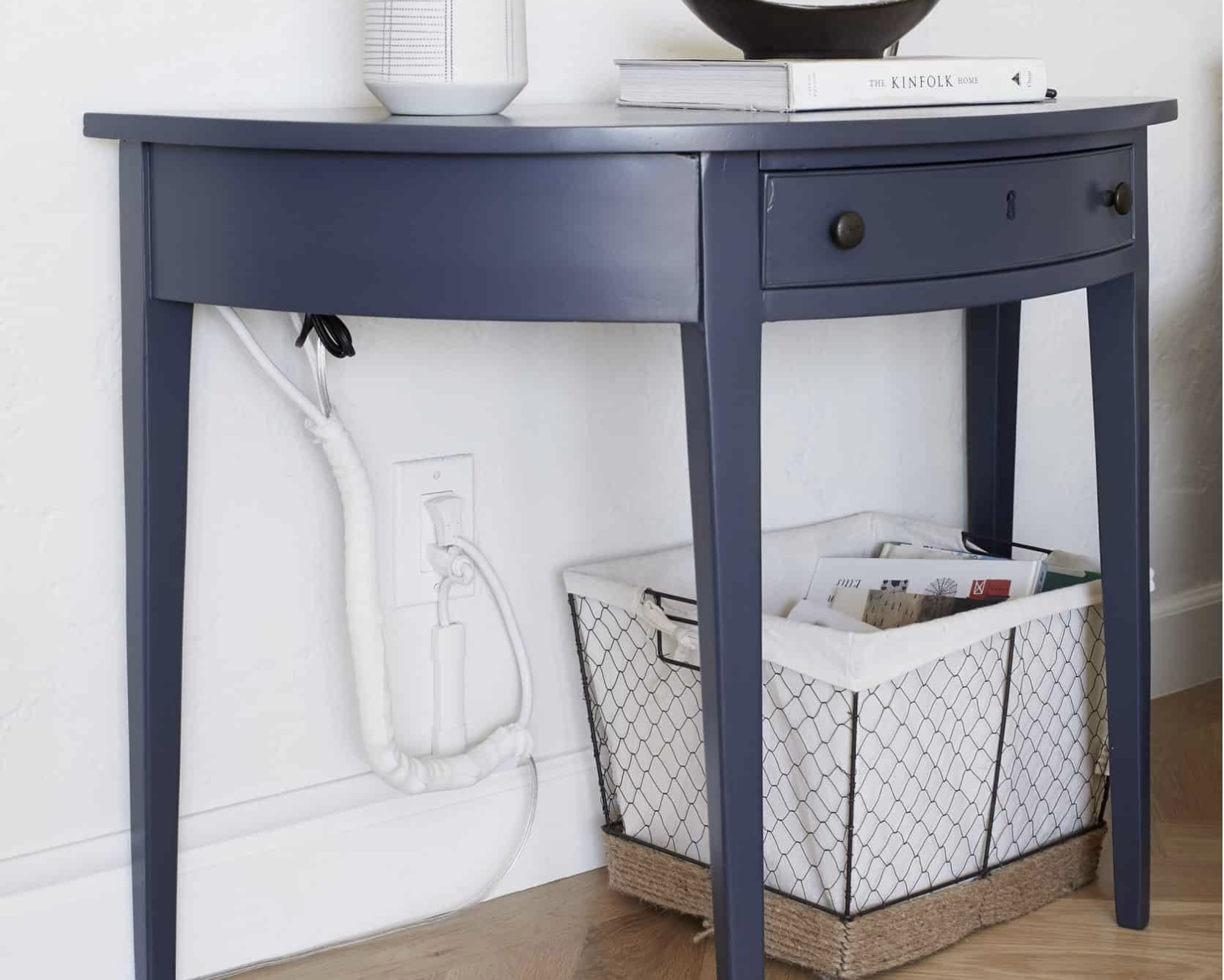
Nothing interrupts a beautifully styled room quite like a tangle of black cords running down the wall.
Phone chargers, extension cords, routers, television cables, and computer equipment are all part of modern life, but they don't need to be the first things we notice.
The fix: Use cord covers, cable clips, or furniture that conceals electronics. A simple cable management box can make a surprising difference.
Sometimes the smallest visual distractions have the biggest impact.
Source: Sara Ligorria-Tramp
4. An Overcrowded Entryway
Your entryway sets the tone for the rest of your home.
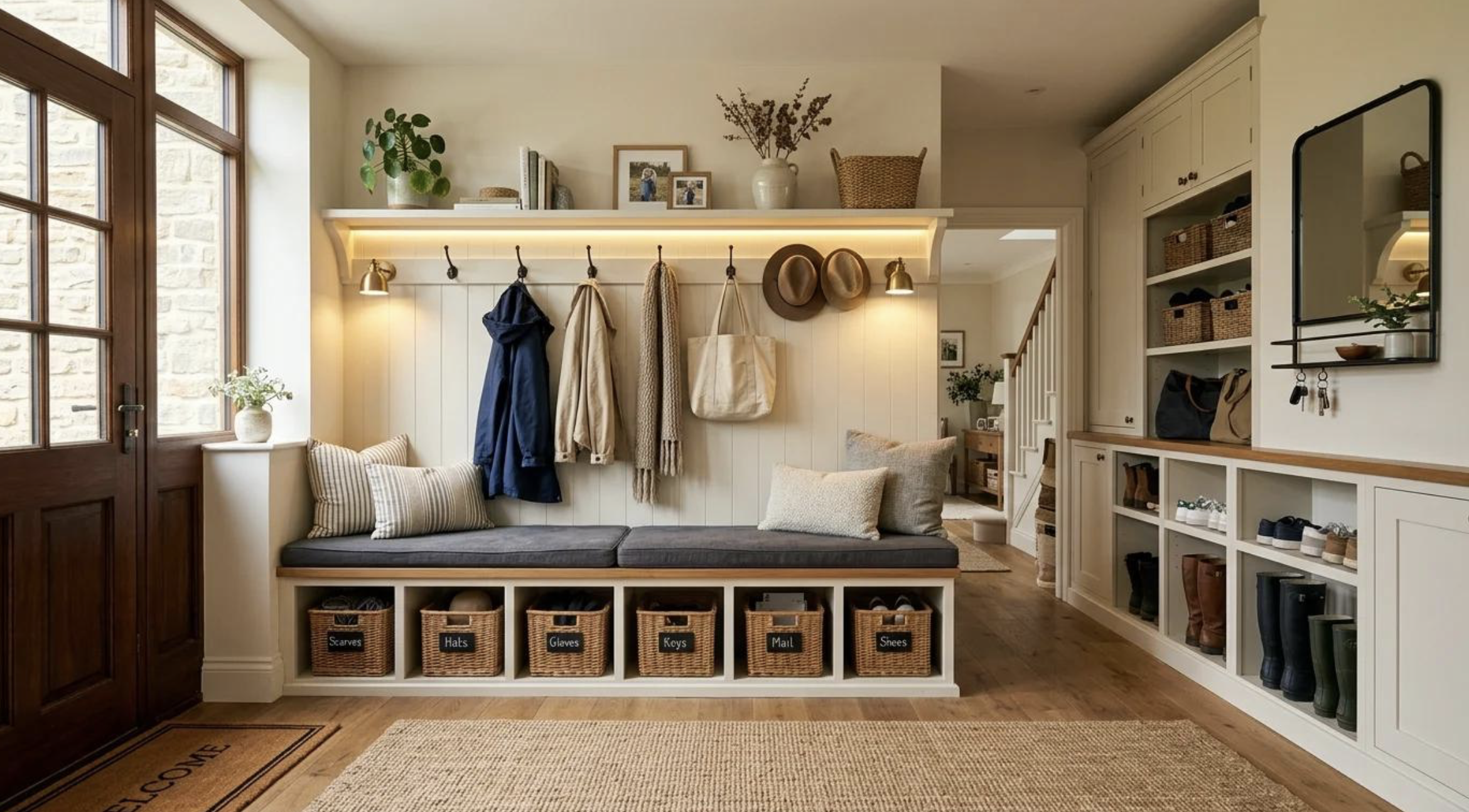
Unfortunately, it's also where shoes, coats, bags, mail, and packages tend to accumulate.
Even when the rest of the house looks great, a busy entry can make the entire home feel less organized.
The fix: Create a designated home for the things that naturally land there.
A basket for shoes, hooks for frequently used coats, and a small tray for keys can work wonders.
But here's the important part: Don't create storage for unlimited stuff. Decide how much the space can comfortably hold and edit regularly.
Source: Boho and Zen
5. Too Many Patterns, Colors, and Textures Competing
Visual clutter isn't always about having too many belongings.
Sometimes it's about having too many design elements competing for attention.
A patterned rug, busy curtains, multiple pillow fabrics, colorful artwork, and lots of decorative accessories can all be beautiful individually—but together, they may overwhelm a room.
The fix: Give your eye somewhere to rest.
If your rug has a strong pattern, consider quieter pillows or window treatments. Repeat a few colors throughout the space to create cohesion.
You don't need everything to match. In fact, I prefer when it doesn't!
The goal is balance, not uniformity.
6. Open Shelves That Are Too Full
Open shelving can be beautiful, but it can also become a showcase for clutter.
Books, baskets, framed photos, souvenirs, and decorative objects often get added over time until every inch is occupied.
Even neatly arranged shelves can feel visually heavy when there's no empty space.
The fix: Remove everything and start fresh.
Group similar items, vary the heights of objects, and leave some open space between arrangements.
And remember, not everything needs to be on display. Closed storage is your friend!
7. Things That Don't Have a Real Home
This may be the biggest source of invisible clutter.
The sweater draped over a chair.
The stack of papers waiting to be filed.
The reusable shopping bags sitting by the door.
The items that are always temporarily sitting somewhere.
When something doesn't have a designated home, it tends to migrate from one surface to another.
The fix: Pay attention to the things you repeatedly move around.
Ask yourself: Where would it make the most sense for this to live?
Sometimes the answer is a hook, drawer, basket, or shelf. Other times, it's realizing you don't actually need the item at all.
The best organizing systems work with your natural habits, not against them.
Take a Fresh Look at Your Space
Here's a little exercise I love.
Walk into a room and pretend you're seeing it for the first time.
Better yet, take a photograph.
It's amazing what you notice in a photo that you've stopped seeing in real life.
Do the countertops look crowded? Are there too many small accessories? Is there an awkward pile that has become part of the scenery?
Choose just one thing to change.
You may be surprised at how much calmer the room feels.
Final Thoughts
A home doesn't have to be perfectly minimal to feel organized and beautiful.
In fact, some of the most inviting homes are filled with personality, meaningful objects, and a thoughtful mix of old and new.
The secret is knowing when to add—and when to take away.
Sometimes creating a more beautiful home isn't about finding the perfect new accessory or buying another storage basket.
It's about removing the little distractions that keep us from appreciating what we already have.
Because a well-curated home isn't necessarily one with less personality.
It's simply one with a little less visual noise—and a lot more harmony.