
Unless you’ve been living under a rock (perhaps one that needs organizing), you’ve probably heard a lot about AI.
It can write emails, plan vacations, create images, compare products, make lists, and seemingly do something new every week.
But can it actually help you create a more organized and beautiful home?
Absolutely.
I’ve been using AI more and more in my own work, and what I find most exciting isn’t that it replaces what we already know how to do. Instead, it can help us brainstorm, visualize, research, plan, and get unstuck.
And you don’t need to be particularly tech-savvy to use it.
Here are some practical ways AI can help you organize and style your own home.
Think of AI as Your Brainstorming Partner
One of the best things about AI is that you don’t need to know exactly what you’re looking for before you begin.
Instead of saying:
"Help me organize my pantry."
Try:
"I have a small pantry with five 30-inch-wide shelves. Two adults and three teenagers use it. We buy a lot of snacks and breakfast foods. Give me a simple organization plan that will be easy for everyone to maintain."
The more specific you are about your space, your problem, and how you live, the more useful AI becomes.
Use AI to Make an Organizing Plan
Sometimes the hardest part of getting organized is figuring out where to start.
Take a photo of an overflowing closet, pantry, cabinet, playroom, or garage and ask AI to break the project into manageable steps.
Try:
"Look at this photo and give me a step-by-step plan for organizing this closet. Tell me what I should declutter first, what categories you see, and what types of storage might work."
You can even add:
"I have three hours on Saturday. What can I realistically accomplish?"
Instead of staring at an overwhelming space, you suddenly have a starting point.
Let AI Help You Decide Where Things Should Live
A well-organized home isn’t about fitting everything into containers. It’s about putting things where they make sense.
For example:
"My kids make their own lunches every morning. Where should I store lunch boxes, containers, snacks, and water bottles so they aren’t pulling things out of five different cabinets?"
One of my favorite organizing principles is to store things where you use them—not necessarily where you’ve always kept them.
AI can help you rethink those habits.
Use It Before You Buy Organizing Products
Please do this one!
It’s tempting to see beautiful bins and baskets and think, “If I buy those, I’ll be organized.”
Not necessarily.
Give AI the dimensions of your shelf, drawer, or cabinet and ask what size containers would fit.
"My pantry shelf is 30 inches wide, 14 inches deep, and 13 inches high. I want three or four containers across the shelf. What dimensions should I look for?"
And remember my golden rule:
Declutter first. Measure second. Buy containers third.
Experiment With Furniture Layouts
Now let’s move from organizing to styling.
Give AI your room dimensions, door and window locations, fireplace placement, and the furniture you already own—or upload a floor plan.
Then ask for several possibilities.
"This living room is 14' x 18' with a fireplace on one wall and windows overlooking the backyard on another. I have an 84-inch sofa and two swivel chairs. Give me three layouts that preserve the view and create a good conversation area."
Even if you don’t use a suggestion exactly, it can help you see possibilities you hadn’t considered.
Try On a New Look Before You Commit
This may be one of the most fun uses of AI.
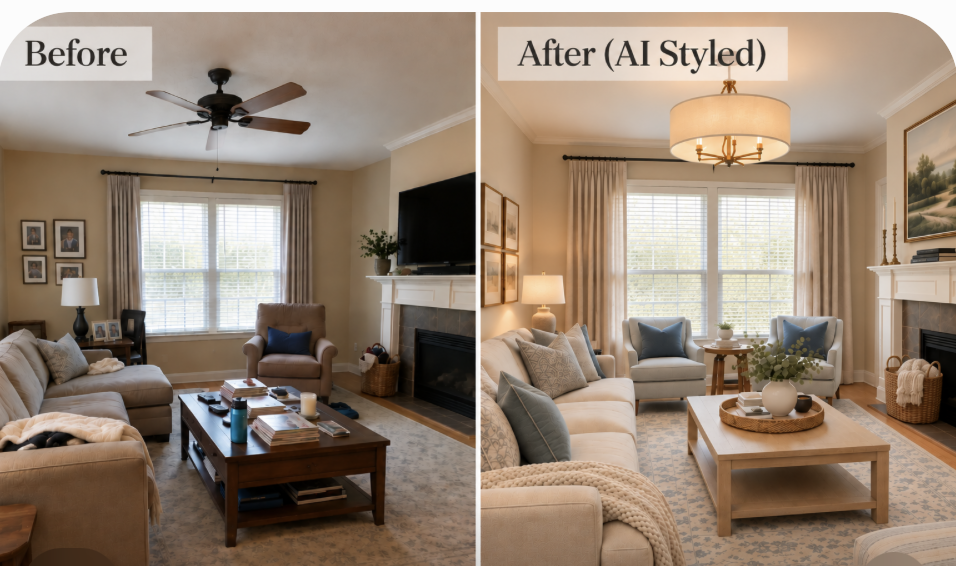
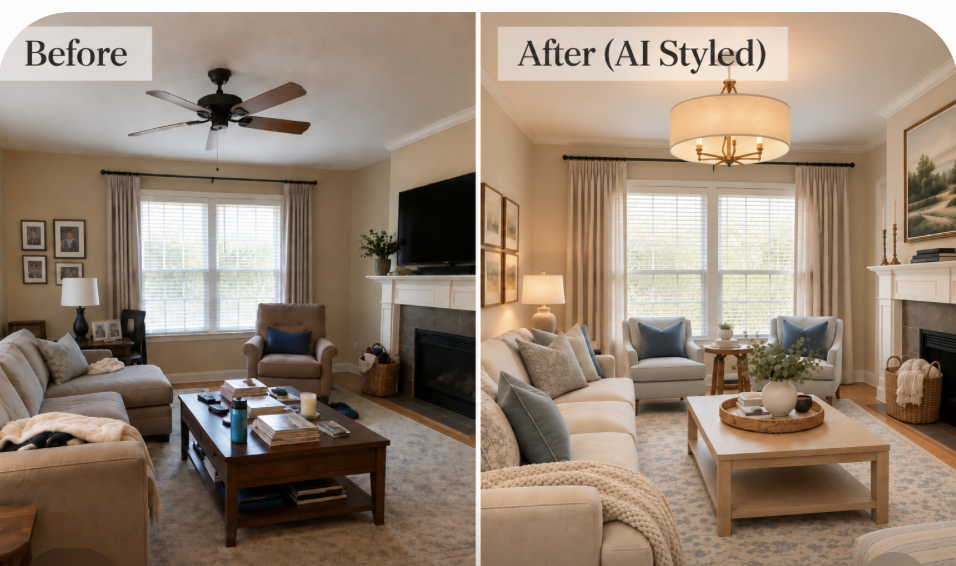
Upload a photograph of your room and ask to see it with a different rug, paint color, window treatment, light fixture, sofa, built-ins, or artwork.
You might say:
"Keep my existing sofa and floors, but show me this room with a warm modern-transitional look using cream, muted blue, natural wood, and brass."
Being able to visualize an idea before spending money can be incredibly helpful.
Just remember that AI-generated rooms are inspiration, not architectural plans. AI can alter proportions or create products and features that don't actually exist (trust me - this happens all the time!), so always verify measurements before making a purchase.
Ask AI Why Your Room Feels “Off”
Sometimes you don’t want a whole new room. You just know something isn’t working.
Take a photo and ask:
"What are the three things making this room feel unbalanced?"
Then follow it with:
"What could I change without replacing my sofa or rug?"
You might discover that the rug is too small, the lighting needs another layer, or the artwork is hung too high.
Good styling doesn’t always mean buying more.
Make AI Your Shopping Assistant
Instead of scrolling through hundreds of products, use AI to narrow the field.
"I’m looking for a 22-inch-high table lamp in cream, light gray, or muted blue. I want something transitional, not farmhouse, under $250."
Include dimensions, budget, style, material, and color whenever possible.
AI can do much of the searching, but always verify prices, dimensions, finishes, and availability yourself before ordering.
Use AI When You’re Decluttering
AI can’t decide whether you should keep your grandmother’s china—but it can help you think through the decision.
Try:
"I have four sets of dishes and only use two. Ask me five questions to help me decide which sets to keep."
Or:
"I’m downsizing from a four-bedroom house to a two-bedroom condo. Give me a checklist of what I should tackle first."
When decision fatigue sets in, having something ask the right questions can be surprisingly helpful.
What AI Can’t Do
As useful as AI can be, there’s one important thing to remember:
AI doesn’t live in your home. You do.
It doesn’t automatically know how your family moves through a room, why a particular piece is sentimental, whether a sofa is comfortable, or how a paint color changes throughout the day.
And while AI can show you dozens of possibilities, sometimes what you really need is someone to say:
"This is the one. Here’s why."
That’s where human judgment—and a professional eye—still matters.
Final Thoughts
I don’t see AI replacing professional organizers, designers, or home stylists.
I see it becoming another tool in our toolbox.
Use it to brainstorm.
Use it to visualize.
Use it to research.
Use it to make a plan.
And use it to get yourself moving when you’re stuck.
Then bring your own personality, lifestyle, and judgment to the final decision.
Because ultimately, the goal isn’t to create the home AI thinks you should have.
It’s to create a home that works beautifully for the way you actually live.