
At some point, many of us find ourselves having a conversation with our parents that neither side is quite prepared for.
Maybe the family home has become too much to maintain. Maybe they're moving to a smaller house, condo, or retirement community. Or perhaps everyone simply realizes that now is the right time to start dealing with decades of belongings rather than waiting until there's a crisis.
Whatever prompts the conversation, downsizing can feel overwhelming—for everyone involved.
After all, you're not simply sorting through stuff. You're sorting through a lifetime.
So where do you start?
The answer is: slowly, thoughtfully, and with a plan.
Start With the Conversation, Not the Closets
Before you start pulling things out of cabinets, talk about the bigger picture.
What is the goal?
Are your parents preparing for an actual move? Do they want to simplify their current home? Is maintaining the house becoming difficult? Are there safety or accessibility concerns?
Most importantly, ask what they want.
Downsizing can feel like a loss of control, particularly when adult children arrive ready to "get rid of things." Even when your intentions are good, that approach can quickly create tension.
Instead, frame the conversation around making life easier and creating a home that works better for this next chapter.
Don't Start With the Most Sentimental Things
The family photographs are probably not the best place to begin.
Neither is Grandma's china.
When you're building momentum, start with easier categories where decisions aren't emotionally loaded.
Think:
Expired food and medications
Old toiletries
Duplicate kitchen utensils
Worn towels and linens
Clothing that is damaged or no longer worn
Old paperwork that no longer needs to be kept
Every decision is like exercising a muscle. Once your parents become comfortable making easier decisions, they're often better prepared to tackle the harder ones.
Break the House Into Small Pieces
"Let's downsize the house" is overwhelming.
"Let's go through this bathroom cabinet" feels manageable.
Instead of looking at the entire home, divide the project into small areas and categories.
One drawer.
One shelf.
One closet.
One category.
Small wins create momentum—and momentum matters.
Know Where Things Are Going Before You Start
One of the biggest downsizing mistakes is creating piles without having a plan for what happens next.
Before you begin, establish some basic categories:
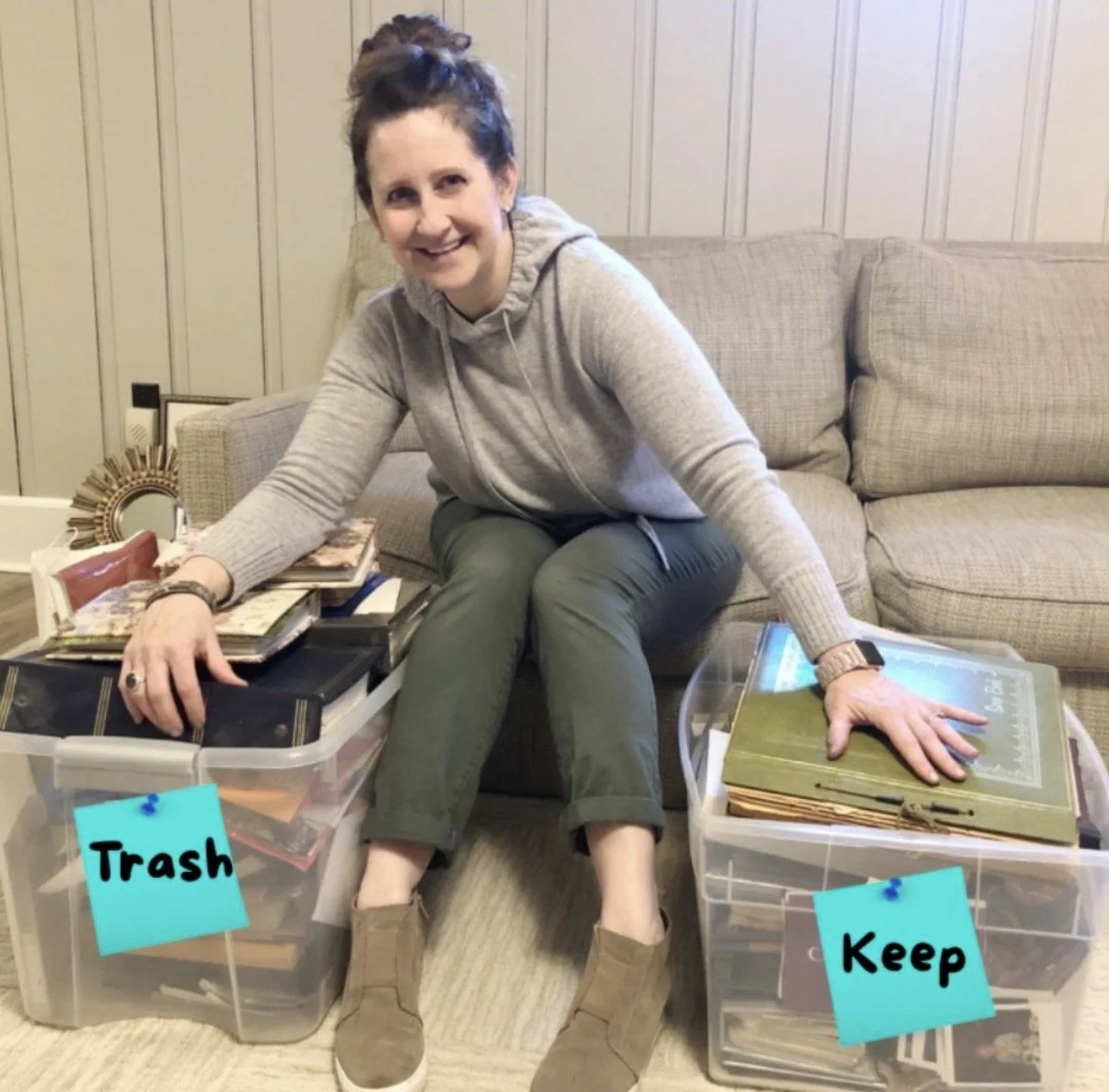
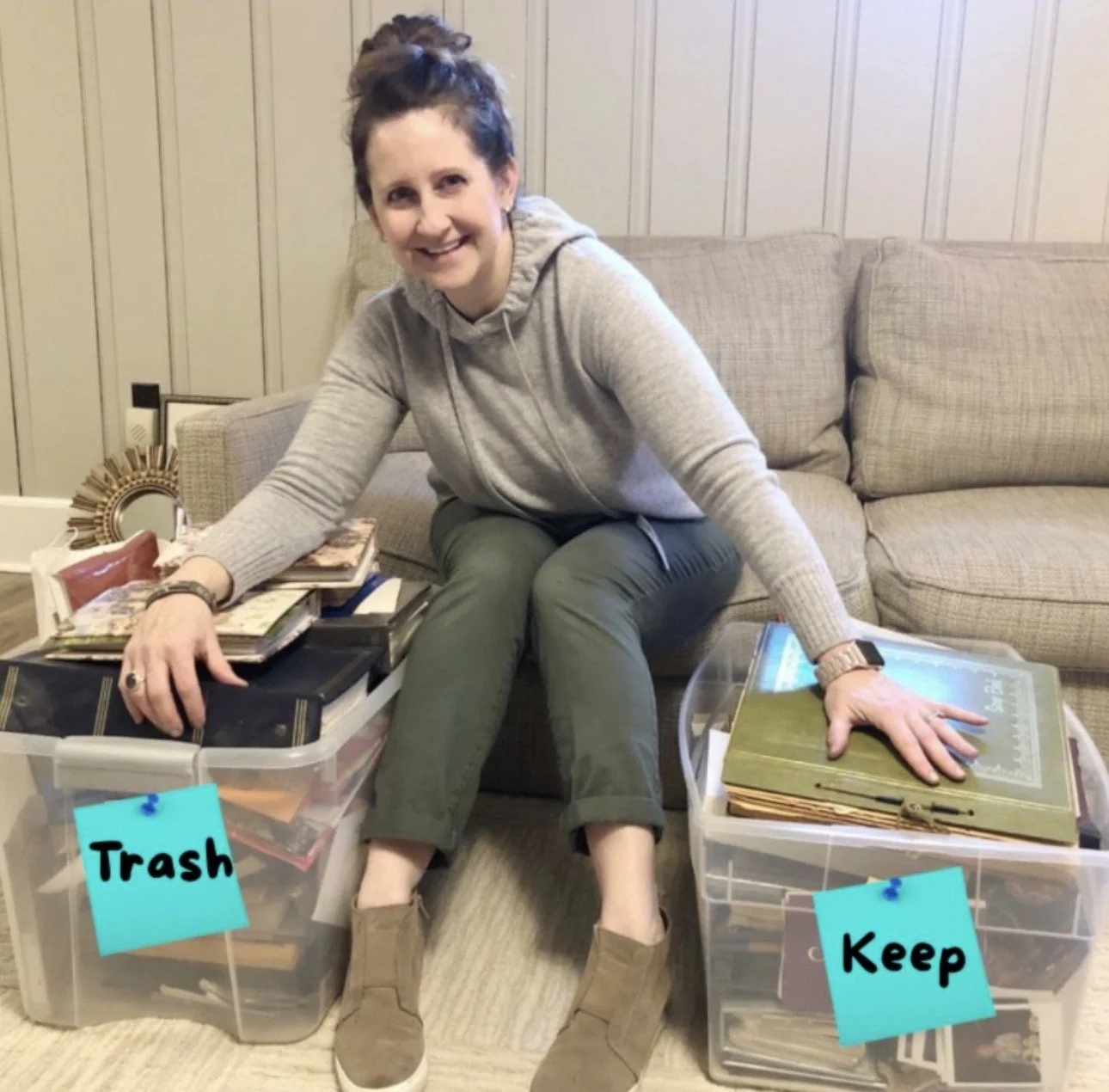
Keep. Donate. Sell. Give to family. Recycle. Trash.
And then have a plan for each one.
Where will donations go? Who is responsible for taking them?
Which items are actually worth selling—and who will sell them?
When will family members need to pick up the things they've requested?
The faster items leave the house after a decision has been made, the better. Otherwise, "donate" piles have a funny way of becoming permanent residents.
Be Realistic About What Is Worth Selling
This can be one of the biggest surprises when downsizing.
Furniture, china, crystal, collectibles, and other items that were expensive years ago may not have the resale value your parents expect today.
Before spending weeks trying to sell everything, determine which pieces truly have a resale market.
Sometimes the time and energy required to sell an item simply isn't worth what you'll receive for it.
And remember: what something cost and what it's worth today are two very different things.
Don't Assume the Kids Want Everything
This is another tricky one.
Your parents may have carefully saved furniture, china, silver, artwork, or collections because they assumed their children or grandchildren would eventually want them.
Sometimes they do.
Sometimes they don't.
And that's okay.
Have family members identify what they genuinely want rather than taking things out of guilt. Passing belongings along should feel meaningful—not like transferring clutter from one generation to another.
Measure the New Space
If your parents are moving, get the floor plan as early as possible.
Knowing exactly how much space they will have makes decisions much easier.
If the new dining area only accommodates a four-person table, keeping a table that seats twelve probably doesn't make sense.
If there are two bedrooms instead of four, you already know that some furniture will need to go.
Rather than asking:
"Do you want to get rid of this?"
Try asking:
"Which of these pieces would you most like to bring to your new home?"
It's a subtle shift, but it changes the conversation from what they're losing to what they're choosing to take with them.
Preserve the Memory, Not Necessarily the Object
Sentimental items are often the hardest part of downsizing.
But keeping the memory doesn't always require keeping the physical object.
Take photographs of meaningful collections.
Digitize family photographs and important documents.
Choose a few favorite pieces from a larger collection.
Write down the story behind an heirloom before passing it along.
The goal isn't to eliminate the past. It's to preserve what's meaningful without requiring your parents—or you—to store every object associated with it.
Give Yourself More Time Than You Think You'll Need
A home filled over 30, 40, or 50 years isn't going to be thoughtfully downsized in a weekend.
And trying to do it too quickly can make an already emotional process even harder.
Whenever possible, start before you have to.
A few hours each week over several months is far less stressful than trying to make hundreds of decisions in the weeks before a move.
Time gives everyone room to process the changes as well as the belongings.
Remember: You're Their Child, Not Their Project Manager
This may be the most important piece of advice.
Helping your parents downsize can change family dynamics very quickly.
You may see a garage filled with things that need to go.
Your parent may see the bicycle you learned to ride, the Christmas decorations you've used for 40 years, and boxes filled with pieces of your family's history.
Both perspectives are valid.
Sometimes bringing in a neutral third party can make the process easier. A professional organizer or move manager can help create a plan, keep decisions moving, coordinate donations and other resources, and take some of the emotional weight off family members.
Then you can spend a little more time being the son or daughter—and a little less time arguing about whether anyone really needs 27 coffee mugs.
Final Thoughts
Downsizing isn't really about getting rid of things.
It's about deciding what deserves to come with you into the next chapter.
When you approach the process gradually, create a plan, and give your parents a voice in the decisions, downsizing can feel much less like a loss and much more like an opportunity.
A smaller home can mean less maintenance, less clutter, fewer responsibilities, and more freedom.
And perhaps the best place to start isn't by asking:
"What can we get rid of?"
But instead:
"What do you want your next chapter to look like?"